
























Power and Perception: Augustus’s Neurological Mystery
It is generally agreed that W. Pringle Morgan was the first to describe dyslexia reliably, through the case of “Percy F.” in 1896. However, much earlier accounts may contain similar reading and language difficulties. Suetonius, in “The Lives of the Twelve Caesars,” records several traits of the emperor Augustus that would be consistent with what we now would call developmental dyslexia.
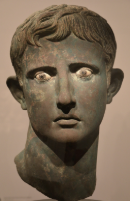
Developmental dyslexia is a learning disability characterized by difficulties with reading and writing despite normal intelligence. What follows is not a diagnosis, but a speculative assessment of behavioral signs filtered through an imperial Roman context of Augustus, born Gaius Octavius in 63 B.C. Suetonius, a Roman biographer born nearly 84 years after the death of Augustus, remarked that Augustus “does not strictly comply with orthography.” (II, LXXXVIII).
On its own, this is not strong evidence of dyslexia, it could reflect perhaps a poor education or lack of attention to writing, yet both explanations are difficult to defend since Augustus was widely regarded as intelligent and capable. Suetonius attested that he applied himself seriously to study: “From early youth he devoted himself eagerly and with the utmost diligence to oratory and liberal studies.” (II, LXXXIV).
Thus, inadequate schooling or limited intellectual ability are unlikely to explain his non standardized orthography. Scholars note that Latin spelling remained somewhat fluid in Augustus’ time, and deviations from orthographic norms were not uncommon even among well-educated elites. Therefore, the significance of Suetonius’s remark depends partly on whether Augustus’s errors exceeded what was typical for the era.
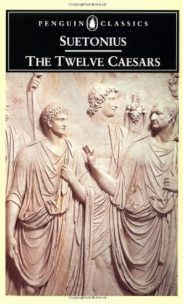
Book by Suetonius
It is also necessary to acknowledge Suetonius’s potential bias. Suetonius was the Emperor Hadrian’s secretary for a time and “The Lives of the Twelve Caesars” was written during this period. Hadrian must have regarded himself as the second Augustus but superior to the first. Suetonius may have been trying to curry favor by highlighting deficiency in the former.
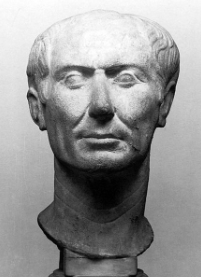
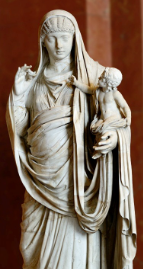
An important consideration on Augustus’ broader neurological context is that his great uncle Julius Caesar is known to have suffered from epilepsy, and the condition appears to have followed his lineage, in Octavia, the sister of Augustus and other descendants such as Caligula and Britannicus. Augustus himself exhibited symptoms that could align with his hereditary vulnerability. It is said he perpetually suffered from headaches and vomiting, such symptoms can accompany epileptic seizures, particularly in the postictal state.
Occipital lobe seizures, for instance, are often associated with severe headaches and vomiting which can often be associated with migraines. The link between these symptoms and his writing difficulties becomes clearer when considered in neurological terms. Dyslexia is understood today as a reading disability associated with atypical development or functioning of language-related brain regions.
Research has shown that epileptiform activity can affect the same neural circuits responsible for reading, orthographic memory, and language processing. People with dyslexia and individuals with epilepsy share certain structural and chemical features in these brain areas. Thus, if Augustus inherited a predisposition toward epilepsy, it is possible that the same neurological factors also influenced his literacy profile. This does not mean that Augustus was incapable or impaired rather, the pattern Suetonius and other sources describe is what we might call compensated developmental dyslexia. Modern research shows that individuals with dyslexia can develop compensatory strategies such as increased reliance on memory, dictation, or intensive rhetorical training that allow them to perform at high levels despite persistent underlying difficulties. Given the political climate of Rome, Augustus would have had strong motivation to conceal any perceived weakness, just as Julius Caesar is believed to have made an attempt to hide his seizures to protect his perception as a leader. It is plausible that Augustus likewise masked a neurological condition for similar reasons.
Of course Suetonius’ brief remark is not enough to diagnose Augustus, but it invites a closer look at the first Emperor’s neurological profile.