




Cinematography and film are deeply appreciated arts that are cherished by many. From movies to trailers, music videos to commercials, this beautiful, intricate art is studied and understood by many to formulate beautiful pieces of work that are shared to the world.
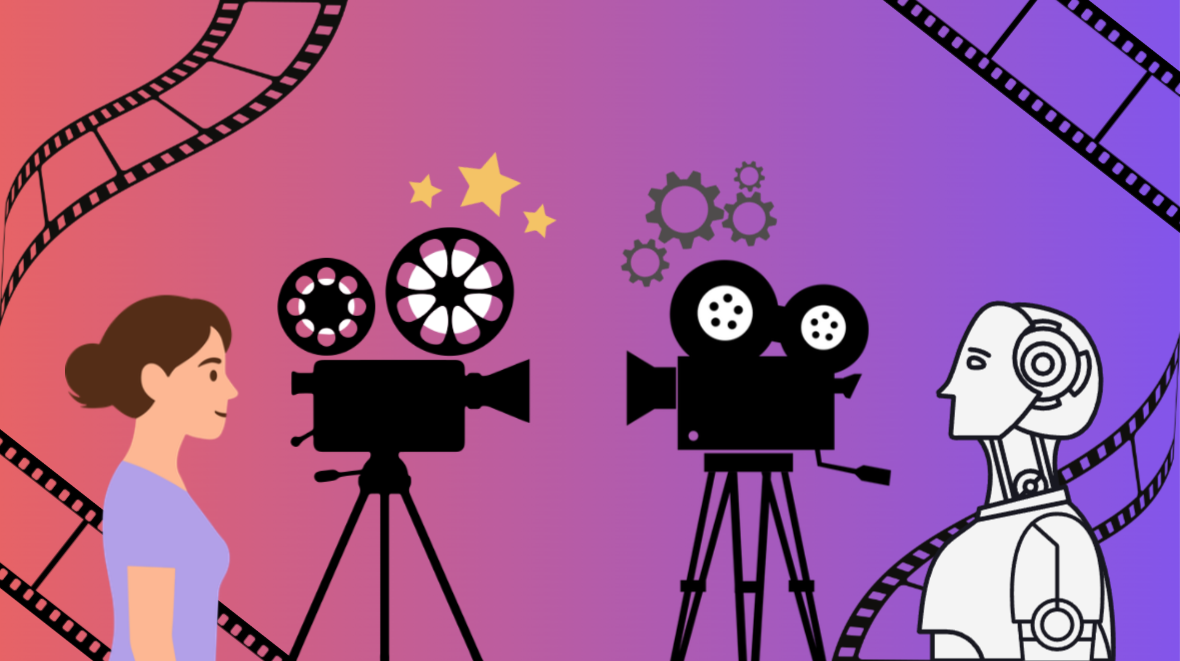
Currently, as many are aware, there is an extensive growth in AI and the usage of AI. Not surprisingly, this widespread usage has only increased as we become more advanced. AI and its tools are slowly seeping into the crevices of the art world, beginning to transform what we know as art into artificial intelligence. This take over has slowly obtained aspects of every form of art, and in this case, it is beginning to take over the world of film, acting, and cinematography.
The question we should ask ourselves is, should we be afraid?
When it comes to cinematic art, there are various aspects of film that AI has been a part of, or can help with. Certain tools can come as an advantage when going about the process of this artwork. Likewise, there are many ways AI can take over this art form, and eliminate its creativity and authenticity completely. Producer Taylor Nixon-Smith shares his perspective on the impact of AI on the film industry. He states,
“AI in the film industry is a peculiar tool. On one hand, it loosens the studios’ stranglehold on creatives; on the other, it’s a Pandora’s box that could easily corrupt an entire industry.”
The usage of AI in film contains specific advantages that benefit production economically, but that might not be worth the risk. As you might have seen online, or more specifically, on TikTok, AI can be given prompts that can easily write and display films, whether that is a script or the film itself. The similarities to reality that AI can produce are close to terrifying. If the film industry were to rely on this resource, we most likely wouldn’t be touching cameras again.
Could that get rid of cinematic art as a whole?
Fortunately, it is not just us—the audience—who believe this takeover is prevalent and dangerous. Hollywood workers actually went on strike to protect their careers from AI. Writers were worried that AI would rewire the process of script writing, and actors and cinematographers were worried regarding their participation in the visual aspects. As a result of this strike, contracts that placed restrictions on the use of AI were created, and made it so that consent for actor replicas was required, and prohibited the AI material from receiving a writing credit. While this strike contained its advantages, there are still specific things that must be looked out for and considered regarding the development of film and cinematic art itself.
To obtain more of a perspective, I interviewed Film Production teacher Coach Cook, and asked him of his opinion on the usage of AI in filmmaking and cinematic art. He shares,
“I think it’s horrible, to be honest, because they used to say there was no way AI would replace real acting, but it’s getting better and better and better… and pretty soon, if that starts taking over us, the good acting will be gone, actors will be no more… I think it’s a bad thing, but can you stop it? No, because all the people are being replaced.”
This replacement is already happening.
The first AI actress, Tilly Norwood, was introduced, created in 2025 by Xicoia, an AI division of the production company Particle6. Many controversies arose from Tilly’s arrival. The threat to human actors is the biggest controversy surrounding this situation, along with her lack of human experience, and critics claiming that Tilly could’ve been trained on the work of real human performers without their permission, ultimately going against what the strike aimed to protect.
As we all know, the progression of technology concerning AI is only becoming more advanced. The best we can do as the audience is give our attention to authentic, real films with human actors and real cinematography. While the usage of AI for small tools in film is irreversible, we can still do our best to recognize and appreciate authentic creativity within film. We should praise the authenticity of true, genuine cinematic art that shaped us into the society we are today.
Real film is fundamental; it is even more important that we appreciate it. Never forget the little kid sitting in front of the TV, or seated in a movie theater, absorbing the genuine works of art. Art that is written, created, and acted by real life people.