














The salmon life cycle is nature’s greatest adventure.
Not only do salmon display their own abilities to overcome obstacles nature throws their way, but they also set examples for the conscious to adapt traits such as determination and resilience. Only some are truly aware of the difficulties these well-known creatures face. This process is also known as semelparity, the strategy organisms typically use, inserting all their energy into a single reproduction event.
Specifically, there are a total of 7 different types of salmon species, but the 5 main species linger in North American waters. The Chinook, Coho, Chum, Sockeye, and Pink salmon. Out of all these salmon,the Atlantic salmon which is distantly related to the familiar pacific salmon is not affected by this cycle as they are able to survive even after spawning.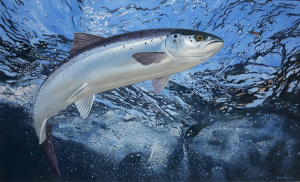
Salmon’s Life Cycle
All salmon follow the habit, anadromous, fleeing upstream of freshwater to reproduce. Salmon begin their journey usually in the fall, in freshwater within gravel, being born from the female salmon into eggs grouped together, referred to as redds. Later on to be fertilized by the male salmon. The now fertilized eggs would remain fostered until the winter, where they are allowed to develop into young embryos and in the future, hatch into tiny fishes, alevins nearby the spring. These alevins will not immediately elude the freshwater, remain hidden in the freshwater in the gravel, relying on their yolk sack for food until they are large enough and grow into a fry.
As the young salmon begins to grow, they start to develop a new appearance to help them adapt into their soon to be environments. They grow parr marks, a pattern to help the fish camouflage. With the salmon’s development, they have begun taking in the burden of finding their own food. Due to this, they will become dependent on prey such as planktons or insects as a source of food within their environment. They carry on the lifestyle of hiding and hunting inside their habitat for up to
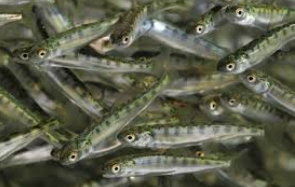 freshwater within gravel, being born from the female salmon into eggs grouped together, referred to as redds. Later on to be fertilized by the male salmon. The now fertilized eggs would remain fostered until the winter, where they are allowed to develop into young embryos and in the future, hatch into tiny fishes, alevins nearby the spring. These alevins will not immediately elude the freshwater, remain hidden in the freshwater in the gravel, relying on their yolk sack for food until they are large enough and grow into a fry. 2 years depending , until they are old enough for the smoltification stage of their life.
This stage is a vital section to the salmon’s journey, going from freshwater to saltwater, these fishes must drastically change some of the major functions of their bodies to be able to survive the strong waters waiting for them. Some of these changes involve the transformation of their skin, gills, and even kidneys. Throughout this process, salmon will begin their journey down stream, into estuaries, spending up to months inside this area to become better situated with the new environment. This however, varies based on the type of salmon. For example, the Sockeye salmon species will bravely head directly to the ocean while the Chinook salmon species may spend at least 3 months. Within these estuaries, the fishes are able to properly regulate their internal salt balance.
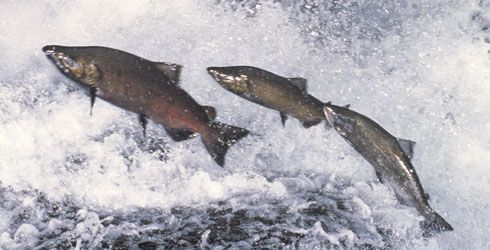
As the salmon make their way to the oceans, they witness a big change in their environment. Suddenly, there is more access to food than freshwater which allows them to grow quickly and larger. They will remain in the sea water for years throughout their adulthood before they eventually become ready to then reproduce. The sea water, although is not a safe environment with the constant predator and competition for food. Therefore, salmon will return back to their exact place of birth upstream to ensure the well-being of their young.
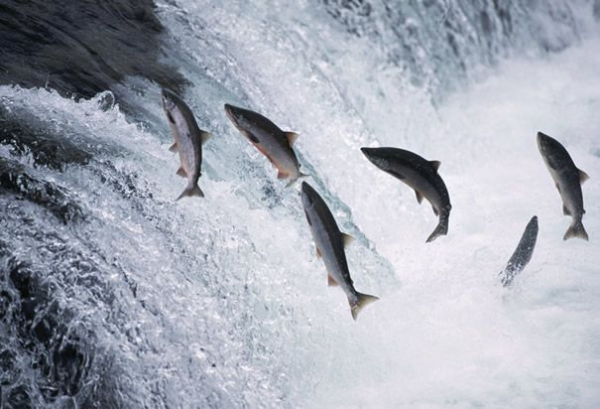
In this stage, salmon will finally display semelparity. These determined creatures stop eating and assert all energy into their migration process. Due to this, salmon will begin to deteriorate and they become too weak for survival after the reproduction period, getting their nickname “zombie salmon.” Their decaying bodies however provide the bodies of water with nutrients such as nitrogen and phosphorus. 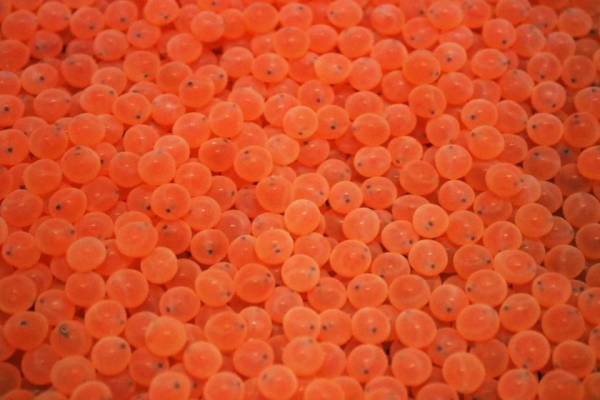
When salmon finally make it to their origin place of birth, they are then able to reproduce, putting one final effort before they pass on.
This creates the salmon cycle, passing on the role of the well-known fish to the next.