























What is MBTI and how is it determined?
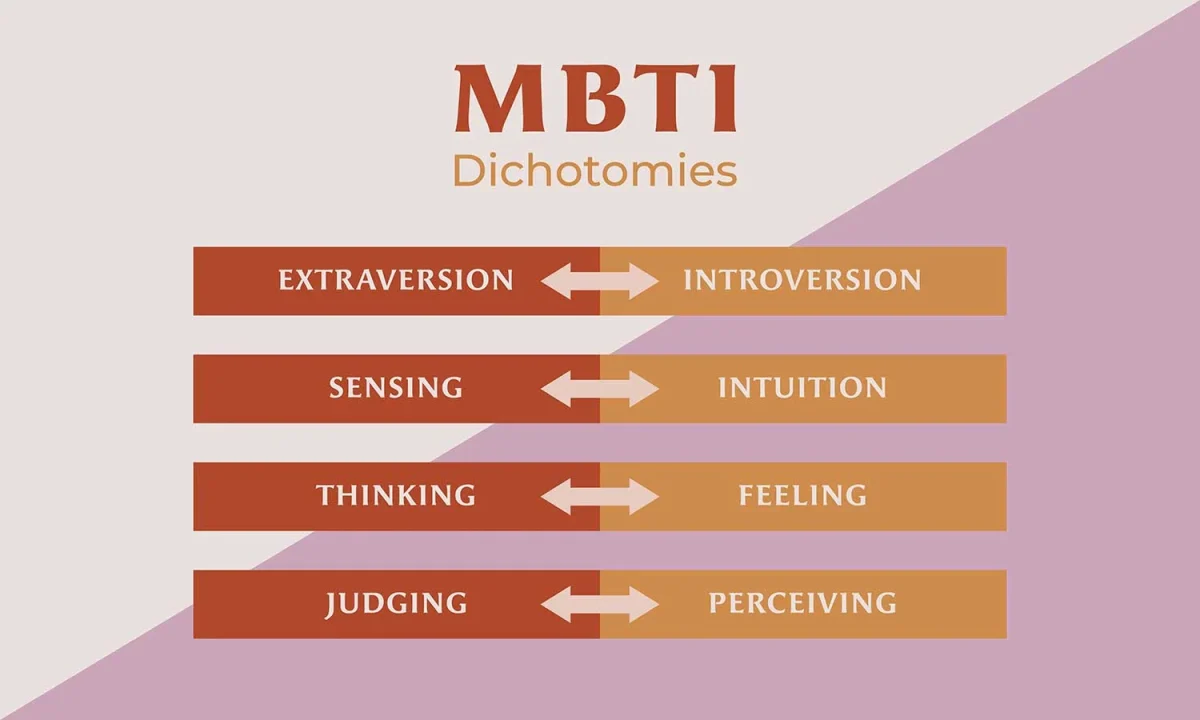
Myers-Briggs type indicator, known as MBTI, is a questionnaire that can categorize an individual into one type out of 16 different personalities. Each letter represents a different type and is also graded on a percentage scale. Here is what the different letters symbolize:
I (introverted) or E (extroverted): How you use your energy
S (sensing) or N (intuition): How you take in your information and process it
F (feeling) or T (thinking): How you make decisions
P (perceiving) or J (judging): How you plan and organize your life
The popular online test from 16personalities asks 60 questions on an agree or disagree scale. After choosing what you feel best represents yourself, it gives you a profile with your personality type. According to the 16 personalities website, 91.2% of the test results were rated as accurate or very accurate.
Limitations and Criticism
Although the tests can be accurate, the results are not scientific. The method used for typing is outdated compared to current methods of personality psychology. It also does not allow for the categories to be viewed on a larger scale; as not all people fit into one of two categories. On top of that, a study from Dr. David Pittenger of Marshall University demonstrated unreliability in the Myers-Brigg type test. During “a 5-week re-test, 50% of the participants received a different classification on one or more of the scales”, proving how easy it can be to get different results.
Common Misconceptions
Some people believe that your MBTI is your permanent type; although this is not true at all. A psychologist at University of Illinois, Brent W. Roberts, says that “our personalities change in response to the social roles and responsibilities that we adopt over time”. Typically, this can be seen in people becoming more mature and developing better stability as they age in order to adapt to certain circumstances.
Benefits + Utilization
When used properly, knowing your MBTI can be very helpful. It is a great tool for self reflection, like your preferences and daily routine. Communication habits can also be determined and practical to know in many scenarios. One scenario being relationships, both romantic and in friendships. MBTI can also be beneficial regarding careers and work habits. It can assist in finding how your behavior interacts with others in your workplace. Furthermore, it can give you a better idea of what careers would suit your personality and routine.
Ultimately, MBTI can be a practical tool when used properly. Being aware of the limitations and not believing in common misconceptions can lead to the correct usage and less error. While it cannot capture our entire personality, it offers a good starting point for further self-exploration.