
























Chronic Traumatic Encephalopathy
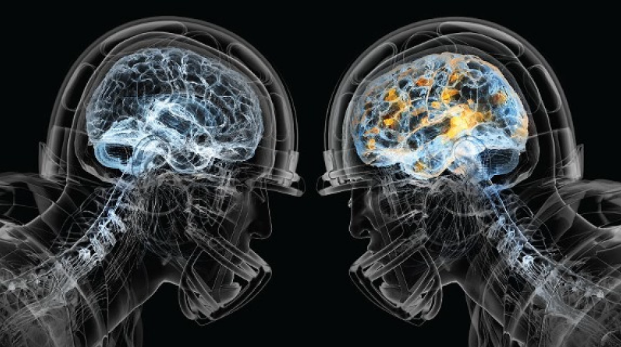
When you do sports, you are automatically at risk of getting a concussion. When most athletes finish their activity without getting concussed, they think that they have protected their brain well. But that is not true. Even if you don’t get concussed, you can still injure your brain, which, over time, can lead to CTE. Three letters that stand for something many have hardly heard of, unaware that it can have a long-term impact on their lives.
CTE was originally known as the “punch-drunk syndrome.” It was first described in 1928, where it was only seen in boxers. In 2002, after an autopsy was performed on former American football player Mike Webster, he became the first person to be officially diagnosed with CTE. It wasn’t until 2022 that the United States National Institutes of Health formally acknowledged that there was a link between repeated blows to the head and CTE.
But how do repeated brain traumas lead to CTE? It is primarily caused by repeated traumatic brain injuries. This includes concussions and nonconcussive impacts. For example, a nonconcussive impact would be if a running back lowers his head to run through contact. To reassure anyone who’s only had a few concussions: people diagnosed with CTE typically went through hundreds, if not thousands, of head impacts. However, this does not mean that you can’t get CTE just by avoiding that many head impacts. It is likely that other factors, such as genetics, may play a role. The interesting thing about CTE is that we don’t know much about it. The only way to definitely know if someone has CTE is through autopsy and there is currently no cure for it. At least we know what a brain that was affected by CTE looks like. 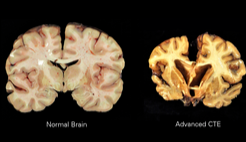
There are different stages of CTE. Possible symptoms CTE patients have behavioral changes, cognitive impairment (memory loss, trouble thinking), trouble with walking, and balance or mood changes like depression and suicidal thoughts. However, if you have one of these symptoms, it may not necessarily be caused by CTE.
In general, anyone can develop CTE, no matter how many head impacts they’ve experienced. However, there are some people who are more at risk than others. CTE has been found most in former tackle football players, but there have also been former members of the military, boxers, hockey, rugby, soccer players, amateur wrestlers, and in a few cases, baseball and basketball players who developed CTE. It has also been found in victims of domestic violence. Unfortunately, no matter which sport you are playing, there is a chance that you can get CTE. That is why you should definitely try to reduce mild traumatic brain injuries and prevent additional injury after concussion.

To better understand what a concussion is, I talked to one of our athletic trainers, Ms. Jimenez. According to her, a concussion is a mild or severe impairment of the brain function, caused by an injury of the head resulting in the actual brain to rapidly move or shake inside the skull. The symptoms of a concussion can range from headaches, dizziness, sensitivity to light, and fatigue to more severe cases like loss of consciousness, vomiting and memory loss. To treat a concussion, it first needs to be seen by a medical professional to diagnose it. For the rehab, it is important to rest, limit screen time, decrease activity to a minimum and not have too much stress on the brain.
She highlights the importance of the concussion being seen by a doctor, as you as an individual should not be diagnosing yourself. Furthermore, continuing playing with a concussion is extremely dangerous, as a second impact on your head can cause a brain swelling which can impact your entire life, which is why concussions are being taken so seriously.
Ms. Jimenez adds that the best way to prevent a concussion is avoiding contact sports and if you play contact sports, you should wear protective equipment. She finishes by saying that, should a big hit happen, it is important to recognize it to make sure that nothing has happened as it is better to be safe than sorry.